
Inside Bruntwork Philippines and The Rise of Remote Excellence
- Sophia

Table of Contents
The Human Engine Behind Global Operations
Every morning, thousands of professionals across Metro Manila log into video calls that span three continents. They troubleshoot software issues for Boston startups, manage customer queries for London retailers, and coordinate data pipelines for Sydney tech firms. The screens glow late into the evening. The keyboards click in rhythm. Behind every transaction, every resolved ticket, and every quarterly report lives a person who bridges cultures, time zones, and expectations.
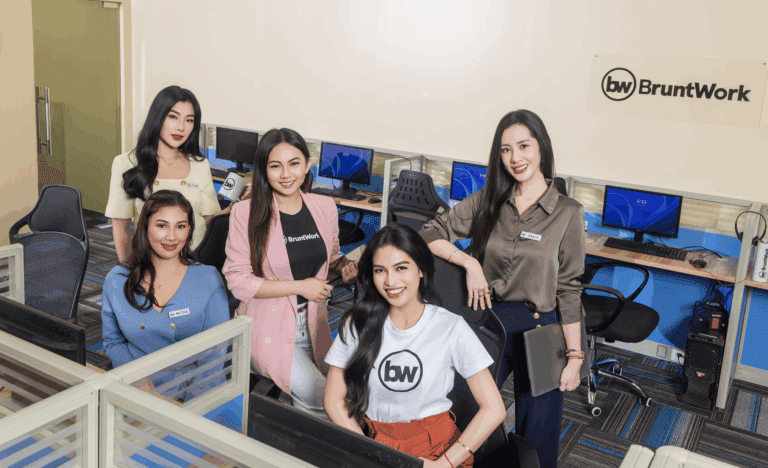
Global remote work thrives on human connection. Technology provides the rails, but people drive the engine. Bruntwork Philippines represents this reality better than most. The company built its global operations hub around a simple premise: excellent work happens when talented professionals receive proper support, clear direction, and meaningful opportunities. The Philippines emerged as the natural center for this vision. Strong English communication skills and cultural adaptability are essential. Technical proficiency pairs with genuine empathy. The result is a workforce that doesn’t simply complete tasks but actively partners in building businesses across borders. Companies exploring outsourcing in the Philippines often discover this distinction quickly.
Why the Philippines Leads the Remote Work Revolution
The numbers tell part of the story. The Philippines maintains a 95% English literacy rate, ranking third globally for business English proficiency. Over 70% of the population under 30 years old expects digital fluency as a baseline. Internet penetration reaches 67%, with major cities offering infrastructure comparable to developed markets. These macro factors create fertile ground for remote work in the Philippines to flourish on a large scale.
What statistics miss is the cultural dimension. Filipino remote professionals grow up navigating multiple cultural contexts. American media, Asian values, Spanish colonial history, and indigenous traditions blend into a unique worldview. This background cultivates natural cross-cultural translators. Someone in Quezon City can decode Australian humor, respect German precision, and match American pace without changing their personality. The bilingual workforce extends beyond English and Tagalog into cultural bilingualism.
The paradigm shifted years ago, though many organizations still operate on outdated models. Companies once viewed the Philippines solely through the lens of cost reduction. Today’s reality looks different. Businesses co-build teams with Filipino professionals who bring specialized skills, strategic thinking, and genuine ownership. The conversation evolved from “How much can we save?” to “How can we scale sustainably?”
Inside Bruntwork Philippines Operations
Building an offshore excellence center requires more than hiring talented individuals. Bruntwork Philippines developed a complete ecosystem that supports professionals from recruitment through career growth. The offshore recruitment strategy starts with identifying candidates who demonstrate both technical capability and cultural fit. Interviews assess communication clarity, problem-solving approaches, and adaptability under pressure. Technical tests measure specific skills. Behavioral assessments evaluate team compatibility.
Training programs span three weeks for most roles. New hires learn client-specific tools, communication protocols, and performance expectations tailored to their role. Role-play scenarios prepare them for common challenges they may face. Veterans mentor newcomers, transferring institutional knowledge and building community bonds. Leadership teams based in Manila maintain direct client relationships, ensuring alignment between delivery and expectations.
The operational model leverages the Philippines’ time-zone advantage deliberately. Teams structure coverage to overlap with North American afternoons and Australian mornings. Hybrid staffing enables clients to maintain their core teams locally while expanding capacity through Manila-based professionals. A Denver company can field customer inquiries 18 hours daily without requiring graveyard shifts. Sydney operations access specialized support during their prime hours. Companies seeking a virtual assistant for customer service find this coverage model particularly valuable for maintaining consistent response quality and reliability.
Client alignment happens through weekly syncs, shared dashboards, and transparent communication channels. Metrics flow in real-time. Issues surface quickly. Adjustments happen collaboratively rather than through rigid hierarchies. The system works because it treats Filipino professionals as integral team members, connected to the mission they serve.
The Cultural Advantage That Makes Filipino Teams Different
Empathy distinguishes Filipino workplace culture from many alternatives. Professionals approach customer interactions with genuine care rather than scripted politeness. When someone calls frustrated about a billing error, the person helping them understands frustration personally. They seek resolution, and ownership of the problem becomes instinctive. This trait cannot be trained easily. Cultural background shapes it from childhood.
Communication clarity represents another differentiator. Filipino professionals excel at reading between the lines, picking up unspoken concerns, and adjusting their approach accordingly. Direct communication happens when needed. Indirect communication becomes necessary when cultural sensitivity is a concern. The flexibility prevents misunderstandings that plague many remote collaborations.
Accountability runs deep in team dynamics. Filipino work culture emphasizes “hiya” (a sense of propriety and shame avoidance) and “utang na loob” (a sense of debt of gratitude). These concepts manifest as professionals who follow through on commitments, support teammates proactively, and maintain high standards because personal pride is closely tied to work quality. Western individualism meets Eastern collective responsibility in productive balance.
Cross-cultural collaboration benefits compound over time. Teams develop shorthand communication. Trust builds through consistent delivery. Cultural differences become assets rather than obstacles. A Melbourne designer learns to appreciate the detailed questions from their Manila counterpart. The questions prevent downstream errors. Long-term retention follows naturally because people enjoy working together and respect each other’s contributions.

Technology, Process, and Quality at Scale
Scaling human-centered operations requires systems that amplify strengths without creating bureaucracy. Bruntwork developed structured onboarding protocols that compress learning curves. New hires access video libraries covering common scenarios. Interactive modules test comprehension. Mentorship pairs ensure that someone experienced guides through early challenges. The process transforms capable individuals into productive team members within weeks rather than months.
Workflow automation handles repetitive administrative tasks. Time tracking, task assignment, and status updates are seamlessly integrated through these platforms. Professionals focus their energy on making judgment calls and solving complex problems rather than dealing with administrative overhead. Analytics tracking provides visibility into performance patterns. Managers identify training opportunities early. High performers receive recognition and opportunities for growth. Struggling team members get support before problems escalate.
The philosophy behind these systems matters. Technology reinforces human strengths rather than replacing judgment. An automated ticket routing system ensures inquiries reach the right specialist. The specialist then applies experience, empathy, and creativity to resolve the issue. Quality at scale emerges from this balance. Companies examining IT outsourcing companies often seek this combination of systematic processes and human judgment.
Quality assurance happens through peer review, client feedback loops, and continuous improvement cycles. Weekly retrospectives identify friction points. Solutions emerge from team discussions rather than top-down mandates. The culture of constant refinement prevents stagnation and keeps operations responsive to changing client needs.
Case Insight on How Global Brands Scale Through Philippine Teams
A mid-sized SaaS company faced customer support challenges as its user base doubled in size. Their San Francisco team of six struggled with volume. Response times slipped from two hours to eight hours. Customer satisfaction scores dropped. Hiring locally would cost $400,000 annually for four additional specialists. They needed better economics without sacrificing quality.
Bruntwork Philippines built a five-person support team in Manila for them. Structured training covered product knowledge, common issues, and escalation protocols. The Philippine team handled tier-one support, escalating complex technical issues to the San Francisco team. Coverage was extended from 6 AM to 10 PM Pacific Time, utilizing overlapping Manila shifts. Response times improved to 90 minutes. Customer satisfaction scores recovered and then exceeded previous benchmarks. The company doubled support capacity without expanding local headcount.
An e-commerce brand selling outdoor gear experienced different pressures. Order volume spiked during holiday seasons. Their inventory management and customer service teams couldn’t scale fast enough. Returns processing lagged. Customer inquiries piled up. Seasonal hiring proved unreliable, and training temporary staff consumed a significant amount of time.
Manila-based specialists stepped in to handle order processing, inventory updates, and customer communication. The team mastered the company’s systems in two weeks. Response time to customer inquiries improved 40% during peak season. The brand maintained consistent service quality whether processing 100 orders daily or 500. Teams seeking support for specialized tasks like those requiring a virtual assistant for data entry found the operational precision and reliability transformative for their workflows.
Both cases share common elements. Structured training transferred knowledge effectively. Process metrics provided visibility. Strong communication prevented misalignment. Filipino professionals brought an ownership mentality that elevated execution beyond rote task completion.
Inside BruntWork Philippines
Remote work isn’t a fallback, it’s a performance advantage. Partner with BruntWork to build vetted Filipino teams that scale fast, cut overhead, and deliver around‑the‑clock results.
Building Sustainable Global Careers Locally
Career growth matters as much as client success in Bruntwork’s Philippine operations. Entry-level specialists start with defined responsibilities and clear advancement paths. Performance reviews happen quarterly. Top performers move into senior specialist roles within 18 months. Leadership positions are available to those who demonstrate a strong ability in mentorship and strategic thinking.
Fair compensation reflects market standards without exploiting arbitrage. Benefits include health coverage, continued education stipends, and professional development opportunities. The company invests in certifications, workshops, and skill-building programs that increase individual capabilities and organizational capacity simultaneously.
Community development extends beyond office walls. Local hiring practices support families and neighborhoods. Professional growth creates role models for younger generations considering remote careers. The ripple effects touch schools, local businesses, and civic organizations as successful professionals reinvest in their communities. Resources like beginner VA career tips help first-time remote professionals navigate this growing field with confidence.
The model blends local community impact with global client success. Filipino professionals build meaningful careers while helping international businesses scale efficiently and effectively. Clients access exceptional talent without extracting value through unsustainable practices. The arrangement works in the long term because mutual benefit runs both ways.

From Outsourcing to Global Partnership
Bruntwork Philippines exemplifies the potential of modern globalization when approached thoughtfully. The operation serves as a global operations hub, where talented professionals receive support, respect, and opportunities. Clients gain capable partners who share ownership of outcomes. The relationship transcends transactional outsourcing and evolves into a genuine collaboration.
The future of work defies simple categorization. Remote versus local misses the point entirely. Connected work matters most. Teams spread across cities and continents collaborate seamlessly when systems support them properly. Cultural differences enrich rather than hinder when people approach collaboration with an open mind. Technology enables connection, but human judgment and creativity drive results.
Companies exploring offshore excellence center models should examine how sustainable practices create better outcomes for everyone involved. Short-term cost savings pale in comparison to long-term partnerships with professionals who grow alongside your business. The question shifts from “How little can we pay?” to “How well can we collaborate?”
Bruntwork’s global workforce model demonstrates what becomes possible when organizations invest in people, process, and partnership equally. The screens still glow late into Manila evenings. The keyboards still click in rhythm. Behind every transaction remains a professional building their career while helping businesses worldwide achieve their goals. That human connection makes all the difference.